
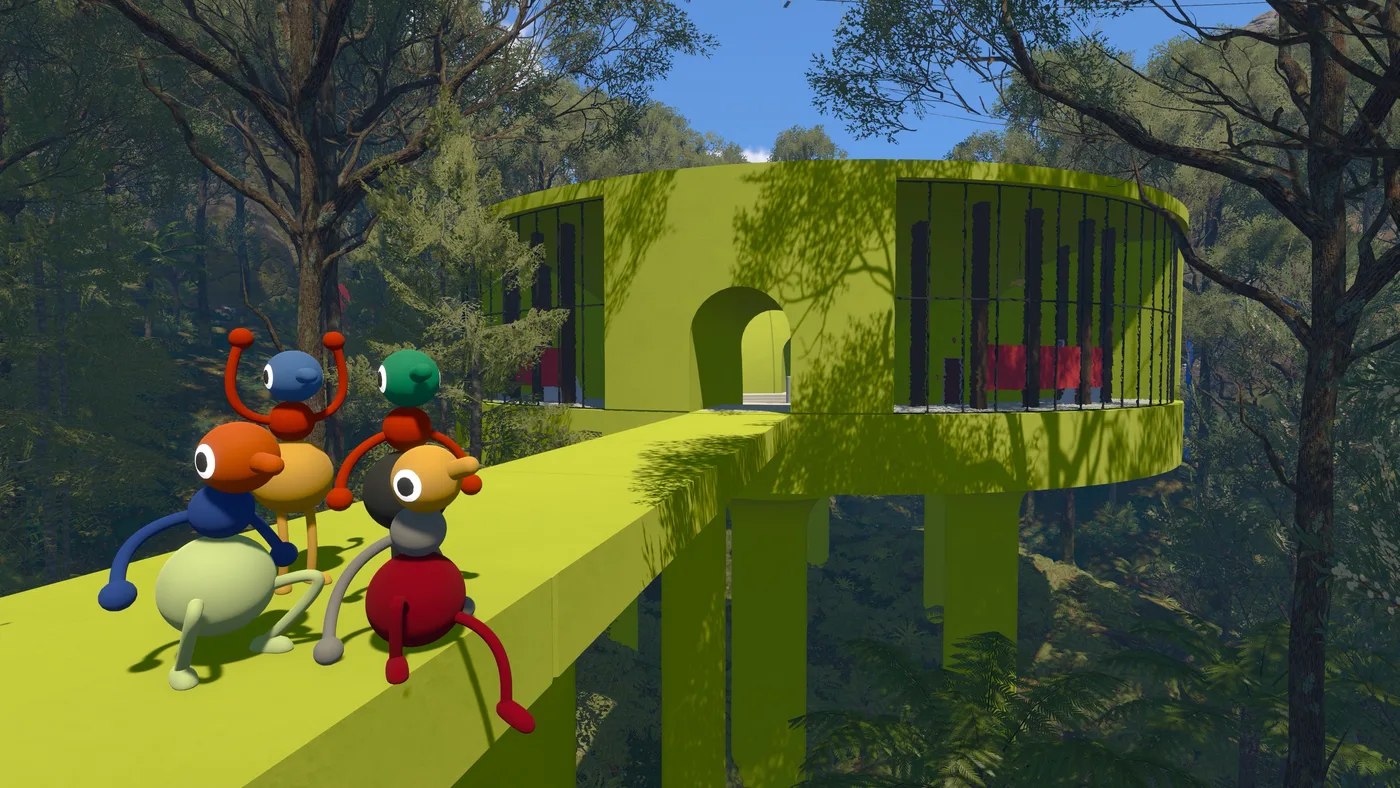
Big Walk released on 4 August 2026 to the strongest reviews of any game that year to date. The PC version sits at 94 on Metacritic — universal acclaim — with perfect or near-perfect scores from several outlets and no scored review below 8/10.
All figures below were recorded on 5 August 2026, the day after release. Aggregate scores move as more reviews land, so treat these as a launch-week snapshot rather than a permanent record.
The scores
- PC94Universal acclaim
- PlayStation 586Generally favorable
- Nintendo Switch 282Generally favorable
| Outlet | Score |
|---|---|
| PCGamesN | 10/10 |
| Eurogamer | 5/5 |
| GameSpot | 9/10 |
| Game Informer | 9/10 |
| Press Start | 8.5/10 |
| Nintendo Life | 8/10 |
| The Guardian | 4/5 |
| Kotaku | Unscored |
| Polygon | Unscored |
| The Verge | Unscored |
| Checkpoint Gaming | Unscored |
Steam user recommendations stood at 1,614 on 5 August 2026 — a day-two figure, and low relative to the review attention simply because the game had been on sale for 24 hours.
Why PC scores higher than console
The three platform aggregates differ by twelve points: 94 on PC, 86 on PS5, 82 on Switch 2. That spread is wider than the individual outlet scores would suggest, and it is worth being careful about what it means.
Metacritic aggregates are computed from whichever outlets reviewed each version. A platform with fewer reviews, or a different set of reviewers, produces a different average from the same game. Nintendo Life reviewed the Switch 2 version at 8/10 and Press Start reviewed the PS5 version at 8.5/10, and both of those are lower than the perfect scores PCGamesN and Eurogamer gave — but they are also favourable reviews, not warnings.
Nothing in the published record identifies a technical problem specific to a console version. If one exists, this page will say so when there is a source for it.
What reviewers agreed on
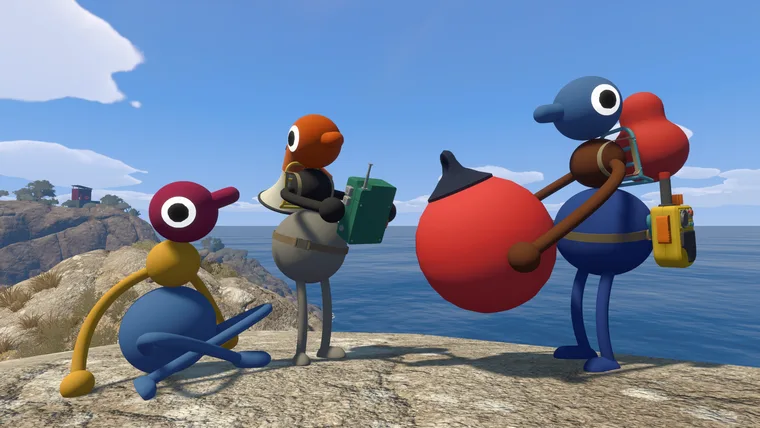
The consistent thread across outlets is the cooperative design rather than any individual system — the fact that the game’s obstacles are built out of communication rather than combat, and that the proximity voice system does real work instead of being a feature bullet.
The headlines carry the tone: GameSpot filed theirs as “one of the best co-op games ever,” The Guardian’s ran as “larking around with mates elevated to an artform,” Press Start called it “the best kind of lost,” and Checkpoint Gaming went with “all friend, no slop.”
Four outlets published unscored reviews — Kotaku, Polygon, The Verge and Checkpoint Gaming — all linked in the table above.
Is it worth it for your group
A 94 does not answer that, because Big Walk’s requirements are social rather than mechanical. Three questions matter more than the score:
Can you get the same people online repeatedly? The save lives on the host’s machine, there is no matchmaking, and only 34.9% of players have reached the map — the first objective past the opening. A group that cannot reconvene will not finish regardless of how good the game is.
Is everyone willing to use in-game voice only? House House ban external voice chat and mean it mechanically: run Discord alongside and several sections stop making sense. If half your group will not give up their usual voice channel, this is the wrong purchase.
Does everyone have their own screen? No split screen, no shared-screen mode, and House House advise against playing in the same room at all.
If those three are yes, the reviews are describing something real. If any is no, a 94 will not fix it.
Reading the review headlines
Critics converged on a specific claim rather than a general one, and the headlines carry it more clearly than the scores do:
- GameSpot — “Big Walk is one of the best co-op games ever”
- The Guardian — “larking around with mates elevated to an artform”
- Press Start — “the best kind of lost”
- Checkpoint Gaming — “all friend, no slop”
- Game Informer — “a walk to remember”
The thread through all of them is social rather than mechanical: the game is being praised for what it does to a group of friends, not for a system or a feature. That is consistent with a design where the central mechanic is talking and the central failure state is losing each other.
What the score does not tell you
A 94 measures how well Big Walk does what it sets out to do. It does not measure whether your group can meet its requirements, and those requirements are unusually demanding:
Everyone needs their own copy and screen. There is no split screen, no shared-screen mode and no trial.
Everyone needs to give up their usual voice channel. House House ban external voice chat mechanically, not socially — parts of the game stop making sense with Discord open.
One person has to be reliably available. The save lives on the host’s machine and nobody continues without them.
The group has to reconvene. 81.5% of players cross the drawbridge; 34.9% reach the map. That gap is not difficulty.
Reviewers played in press conditions with committed groups. If your group is four people who play once and then drift, the number that predicts your experience is the 34.9%, not the 94.
Worth noting alongside the critic scores: Steam user recommendations stood at 1,614 on 5 August 2026. That is a day-two figure and low relative to the critical attention, simply because the game had been purchasable for about 24 hours. It is not a signal about reception either way, and any comparison against a longer-standing title’s recommendation count is meaningless at this stage.