
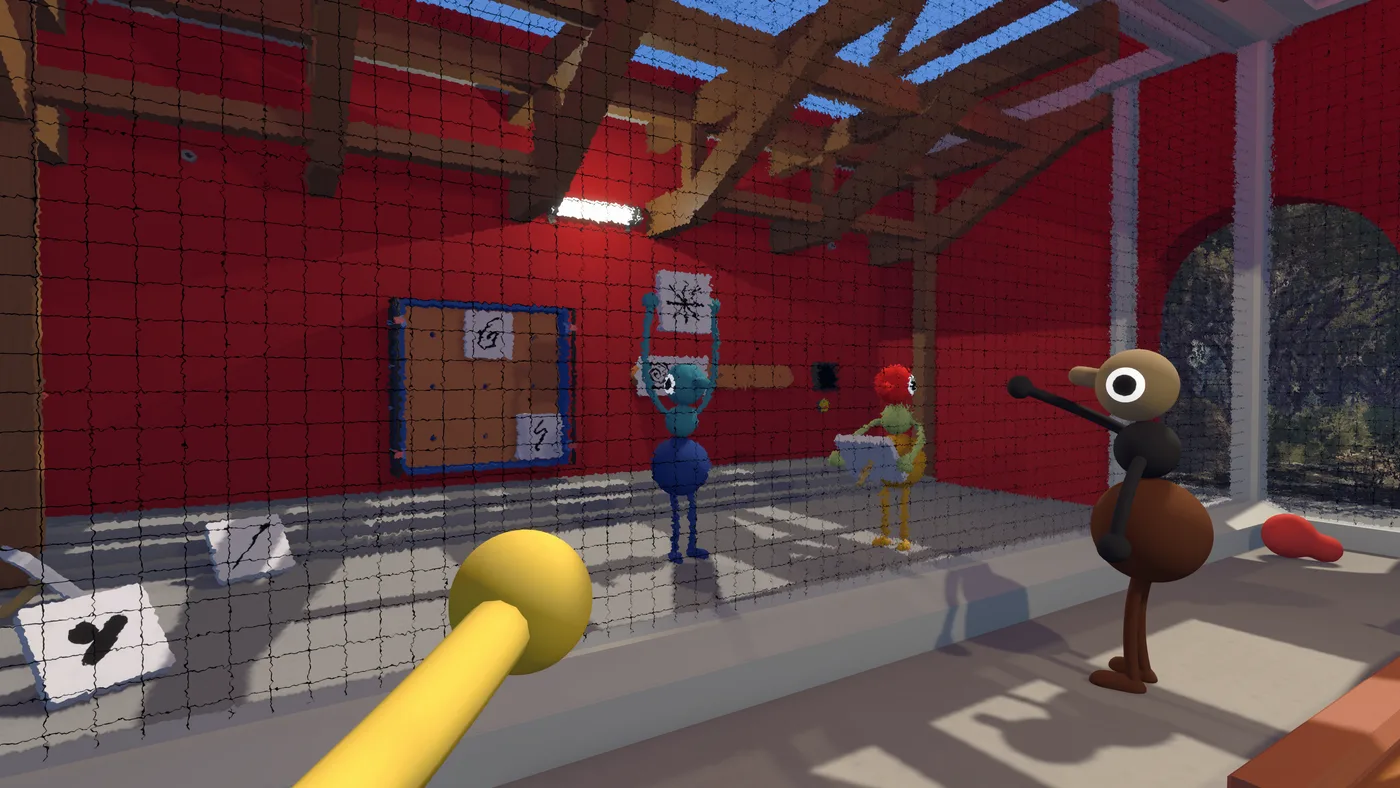
Big Walk supports two to twelve players and there is no single-player mode — House House’s answer to that question is “No, sorry.” What is less well known is that the player count is not just a lobby size. When the host starts a session they choose between a 2-player, 3-player or 4+ player version of the world, and, in the studio’s words, “some things in the world change to adapt to each of these choices.”
That makes it the one setup decision with consequences you cannot see before committing to it, and it cannot be changed partway through a session.
- 1
- 2
- 3
- 4
- 5
- 6
- 7
- 8
- 9
- 10
- 11
- 12
FILLED = A FOUR-PLAYER SESSION · RED = HOST, HOLDS THE ONLY SAVE
Three worlds, not a lobby cap
The three options are 2, 3, and 4+. The first two are exact; the third covers everything from four players up to the maximum of twelve.
House House do not publish what changes between them, so this page will not invent a list. What is confirmed is that the world adapts, which means a puzzle designed to need three sets of hands cannot be sitting there unchanged in the two-player world.
The framing that matters is theirs: treat the setting as the minimum number of players who will be participating, not the maximum. It is describing the group that will be present throughout, not the number of people who own the game.
Which number to pick
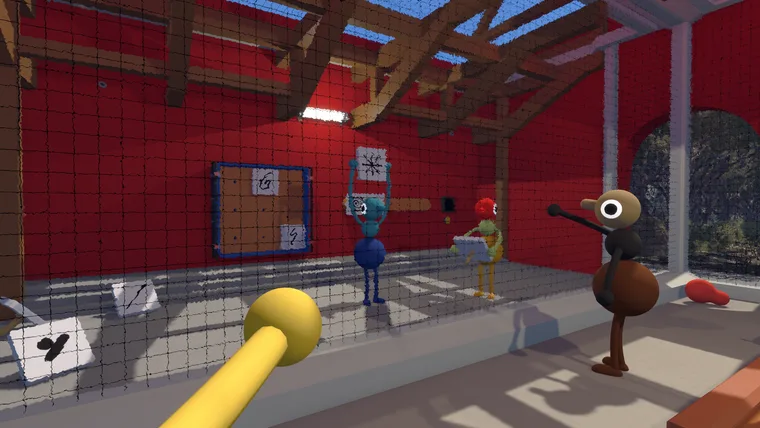
House House say there is no ideal count and that they did not build the game with a specific number in mind. Their own characterisation of the range:
- Fewer players — “a more focused co-op experience.”
- Closer to 12 — “more of a fun, chaotic mess.”
Both are intended, and their stated position is that “it’ll be good no matter how many people you’re playing with.”
In practice the choice is a scheduling question rather than a taste one. A twelve-person group needs twelve people online at the same time, repeatedly, with one specific person among them (the host) present every session. A three-person group needs three. The Steam unlock rates suggest which of those actually happens: 81.5% of players cross the drawbridge, 34.9% reach the map, and 8.2% ride the chairlift.
What Big Walk does not have
Four things get searched for constantly and none of them exist:
Single-player. Confirmed absent. You can technically start a session alone and walk around a little, but per House House “you won’t get very far” — everything in the game is designed for cooperative multiplayer.
Matchmaking. Also confirmed absent, and deliberately. Their reasoning: Big Walk is a long-form game meant to be played with the same group over multiple sessions, so throwing strangers together “doesn’t make sense.” The intended path is organising with people you know.
Split screen and couch co-op. Not supported. Everyone needs their own screen and their own copy. House House additionally advise against playing in the same physical room, because you would hear each other outside the in-game voice system.
Drop-in replacement. With no matchmaking, a missing friend cannot be substituted by a stranger. The group you start with is the group you finish with.
If someone cannot make a session
Two things follow from the rules above.
If the person missing is the host, nobody plays — the save is on their machine and there is no way to continue without them. This is the single strongest argument for choosing your host on availability rather than hardware.
If the person missing is anyone else, the session can run, but you chose your world size on the assumption they would be there. That is exactly the case House House’s “minimum, not maximum” advice is written for: if you know in advance that two of your five are unreliable, start a 3-player world instead of a 4+ one.
What each size actually feels like
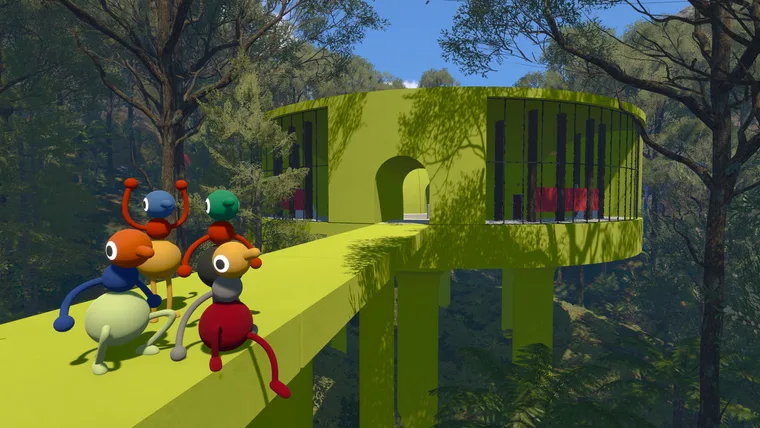
House House describe the two ends of the range in their own words, and the description is more useful than a recommendation would be.
Two players is “a more focused co-op experience.” Everything that happens is between you and one other person; when you split up, the world is empty; when you solve something, you both did it. The 2-player world is a distinct build of the world rather than the same content with fewer people in it.
Close to twelve is, in their phrase, “an absolute mess” — and they mean it as a recommendation. Twelve people in a proximity voice system spread across bushland produces overlapping conversations, people getting lost, and a lot of shouting into walkie-talkies.
Three and four-plus sit between. Note that 4+ is one setting covering everything from four to twelve, so a five-player group and an eleven-player group are playing the same version of the world.
The scheduling maths
The practical constraint is not enjoyment, it is attendance. Big Walk needs the same people repeatedly, and it needs one specific person — the host — every single time.
A four-player group needs four calendars to align, repeatedly, with one of them mandatory. A twelve-player group needs twelve. Since the world version is locked at session start and the setting represents the minimum who will be present throughout, a large group that regularly plays with half its members is playing the wrong world.
The unlock rates suggest how this plays out at scale: 81.5% cross the drawbridge, 34.9% reach the map, 8.2% reach the chairlift. If you want to finish, a smaller reliable group beats a larger unreliable one — and House House explicitly say the game is good at any size, so nothing is lost by choosing three over eight.