
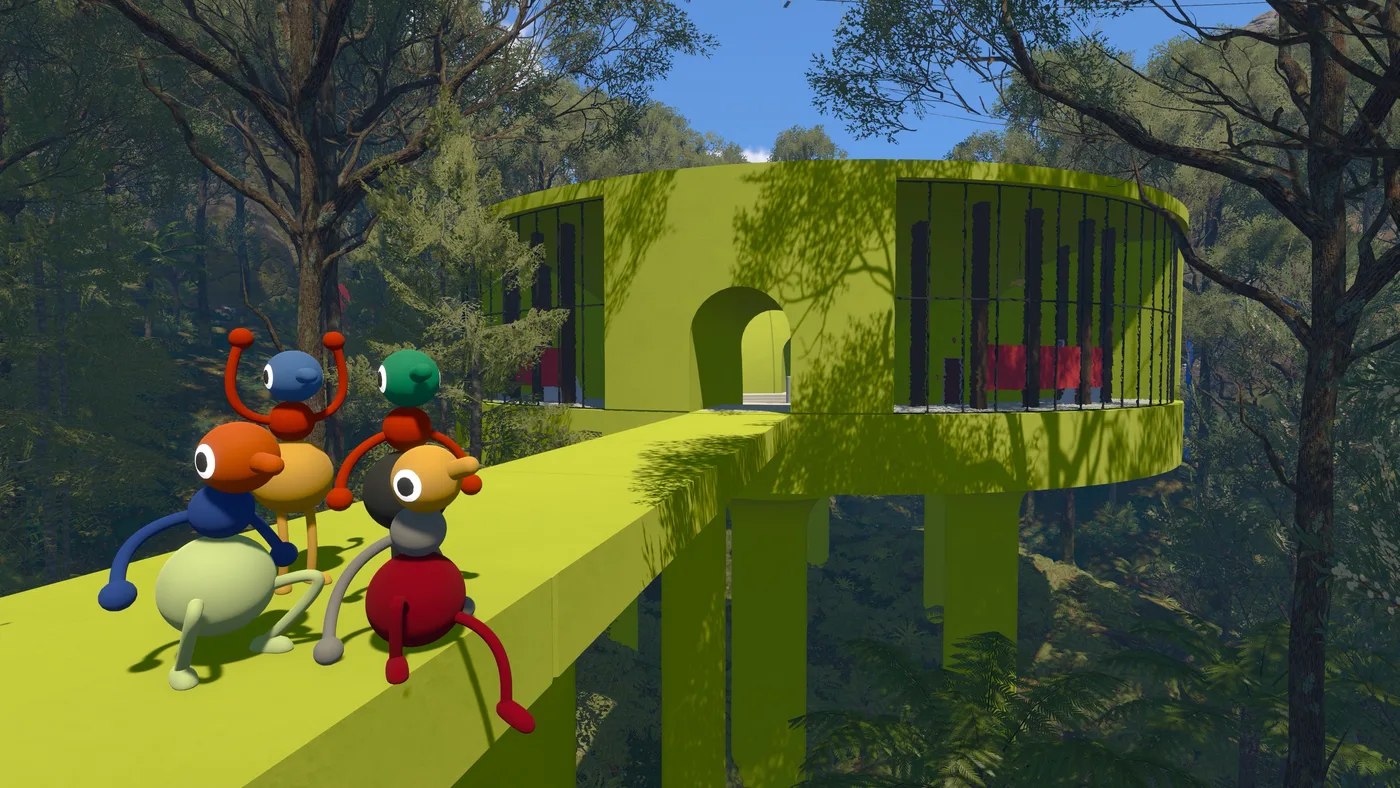
Big Walk’s feature list has three entries about communication, and the second one is called “Arms!!” — two exclamation marks, theirs. The description: point, wave, and gesture “(or just flail around wildly) to communicate in situations where talking isn’t an option.”
That last clause is the whole reason gestures exist. This is a game that will deliberately remove your ability to speak, and when it does, your arms are what is left.
What arms are for
House House name three uses: pointing, waving, and gesturing. Characters can also pick up and carry each other, which is listed under accessibility but functions as physical communication too — moving someone is unambiguous in a way that pointing at them is not.
Pointing solves the problem that language is bad at: “that one, over there.” In a wide-open bushland world where every granite outcrop looks like every other granite outcrop, “the rock” is useless and a pointed arm is not. Waving solves presence — it says I am here across a distance where your voice has already faded out.
The flailing is not a joke feature so much as an acknowledgement that once you take speech away from a group of friends, they will improvise, and the improvisation is the fun.
The situations they exist for
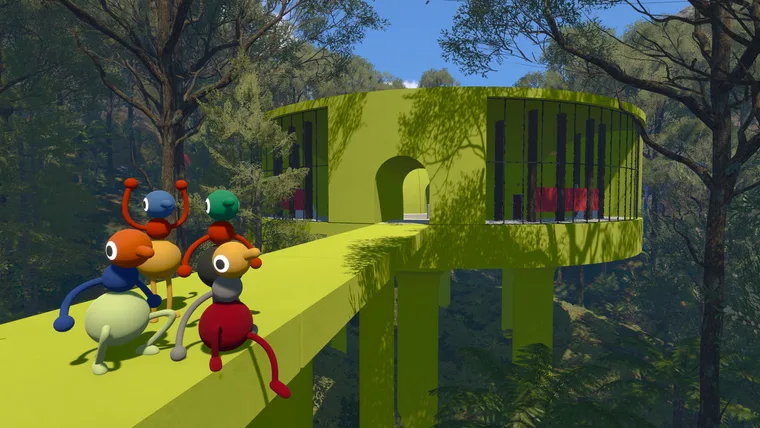
House House describe the game as one that “gives you fun challenges and situations that can enable or restrict your talking in different, and interesting, ways,” and specifically that “you might find yourself in a situation where you can’t hear each other, and you need to find other ways to communicate.”
Two confirmed mechanisms create those situations:
- Geometry. Walls muffle voices; a soundproof barrier stops speech and text alike. The official example for text chat is being on opposite sides of soundproof glass.
- Distance. Proximity falloff removes the channel entirely at range, unless someone is carrying a radio.
Both are the reason external voice chat is banned. Running Discord alongside the game removes the obstacle before you reach it, which is why House House compare it to “playing charades but everybody gets to talk.”
Gesture alternatives you can carry
When arms are not enough, the confirmed tool list is the next tier — and several of the items are, functionally, gestures at range:
- Laser pointer — pointing that works beyond the distance where anyone can see your arm.
- Flares — a position signal that persists without you standing there.
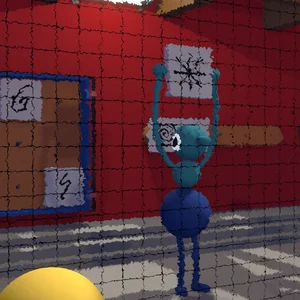
- Whiteboard — named in the official feature list as “whiteboards (?)”, question mark theirs. Nothing further has been published about it.
- Cowbell — “cowbells (??)”. Makes noise; no further official detail.
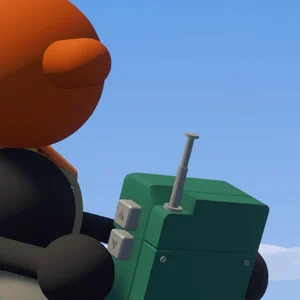 Walkie-TalkieAny range
 MegaphoneOne way
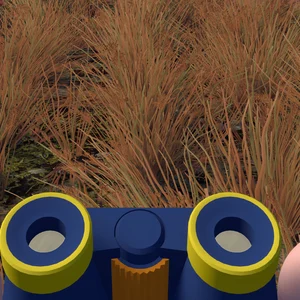 BinocularsStealable
 Laser PointerPointing
 FlarePosition
 WhiteboardUnexplained
 CowbellNoise
 Big Golden Head???
 BackpackWorn
Carrying someone is a gesture too
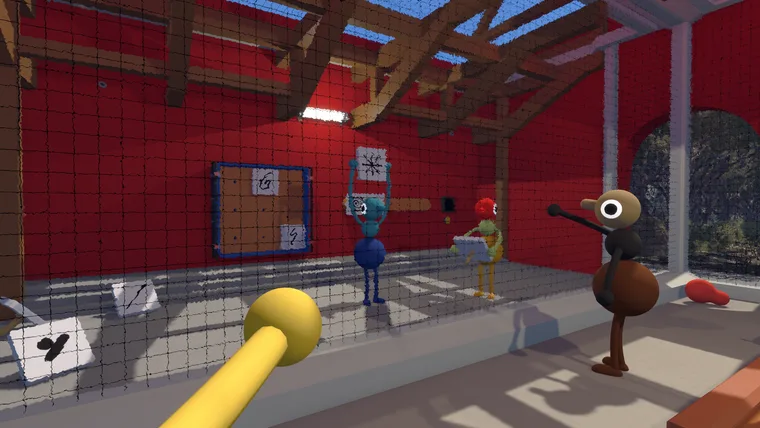
House House list “characters are able to pick up and carry each other” under accessibility features, but in a game where speech has range limits and walls block it, physically moving another player is also a communication act — and an unusually unambiguous one.
Consider what it replaces. Pointing says “over there” and requires the other person to be looking at you and to guess the referent. Carrying says “here” and removes both the ambiguity and the need for them to travel. In a group of up to twelve people crossing terrain where landmarks repeat, that difference is real.
It also has an accessibility purpose that the studio names directly: a player who cannot manage a particular piece of movement can be moved by someone who can. That is why it sits in the accessibility list rather than the traversal one.
What the game does when it takes your voice
The mechanism is worth stating plainly, because it explains why gestures exist at all rather than being a cosmetic emote wheel.
House House say Big Walk contains situations that “can enable or restrict your talking in different, and interesting, ways,” and they use this example: “you might find yourself in a situation where you can’t hear each other, and you need to find other ways to communicate.”
Their argument for banning external voice chat is built on that. Their wording on what happens if you use Discord anyway: “the game won’t stop running or punish you, but you’ll miss out on the most interesting parts of the game. Also, parts of the game won’t really make sense, and it might even become a bit boring! It’d be like playing charades but everybody gets to talk.”
So the arms are not a fallback the studio grudgingly provided. They are the intended solution to a problem the studio deliberately created, and a group that keeps a second voice channel open never encounters the problem in the first place.
Why this is not an emote wheel
Most co-op games have emotes for expression. Big Walk has arms because the game removes the alternative.
The distinction shows up in what House House chose to name. Their communication feature list has three entries: proximity voice, text chat with the same rules, and arms. There is no fourth entry for a ping system, a marker, a compass or a shared map — the standard co-op vocabulary for “over there” is absent, and the tools that partially replace it (laser pointer, flares) are physical objects you have to be carrying.
That absence is the design. In a wide-open landscape drawn from Wilsons Promontory National Park, where granite outcrops and eucalypt scrub repeat, having to show someone rather than mark something for them is the source of most of what happens in a session.